Categories
North Gujarat's premier dedicated glaucoma super-specialty centre.

Ab-externo opening of Schlemm’s canal and trabecular meshwork to restore natural aqueous drainage.
Trabeculotomy is an ab-externo surgical procedure designed to overcome the primary site of aqueous humor outflow resistance—the diseased or malformed trabecular meshwork—by directly opening Schlemm's canal into the anterior chamber.
Unlike filtration procedures (such as trabeculectomy) which divert fluid to an external subconjunctival blister (bleb), trabeculotomy restores the eye's natural, physiological drainage pathway. Because it creates no external bleb, it eliminates lifelong risks of bleb leak, hypotony, and bleb-related endophthalmitis, making it an outstanding choice for young, active patients and congenital glaucoma cases.
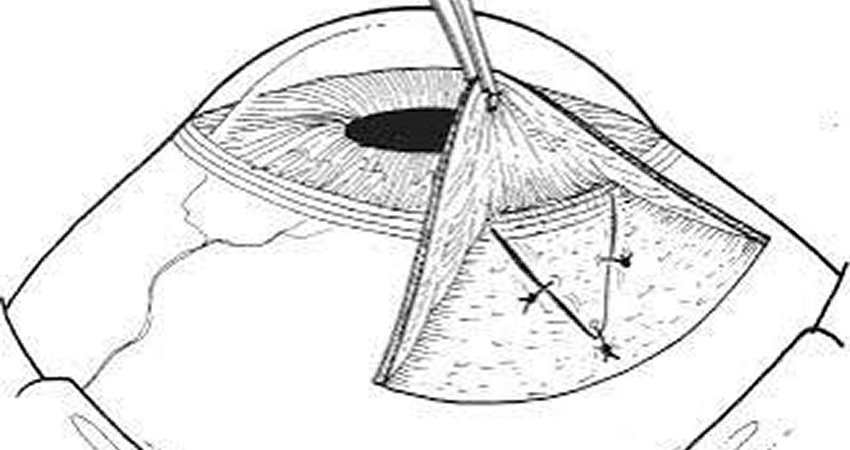
Under high-magnification operating microscopy, Dr. Amola Gandhi dissects a delicate scleral flap to expose the external wall of Schlemm's canal. Once the canal is unroofed, a calibrated metallic Harms trabeculotome or microcatheter is cannulated into the lumen of the canal.
The probe is smoothly rotated toward the anterior chamber, gently cleaving the inner trabecular wall and opening direct communication between the anterior chamber and collector channels. The scleral flap is then sutured water-tight, allowing aqueous fluid to flow directly into the episcleral venous system.
External filtration blebs require lifelong precautions against trauma, water contamination, and rubbing. Trabeculotomy leaves the conjunctiva completely intact and quiet.
This makes it exceptionally safe for active individuals, school-age children, and patients living in rural or dusty environments where bleb infection risks are elevated.
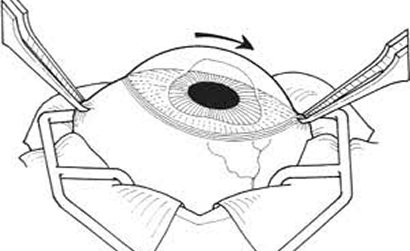
Key reasons Dr. Gandhi recommends trabeculotomy:
A small amount of temporary microscopic blood (hyphema) is common and expected because fluid flows backwards from the venous collector channels once the canal is opened. This naturally clears within 3 to 7 days.
Trabeculotomy opens the internal natural drain without an external blister. Trabeculectomy creates a new bypass drain to an external bleb under the conjunctiva.
Most patients resume normal routine activities within 1 to 2 weeks, with anti-inflammatory eye drops tapered over a month.