Categories
North Gujarat's premier dedicated glaucoma super-specialty centre.

High-resolution measurement of Central Corneal Thickness (CCT) for accurate pressure calibration.
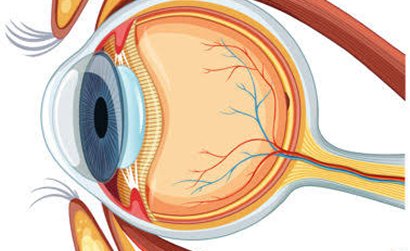
Corneal Pachymetry is the precise ultrasonic or optical measurement of Central Corneal Thickness (CCT), recorded in microns (µm). Central corneal thickness directly influences intraocular pressure readings obtained through applanation tonometry; without pachymetry, standard pressure values can be dangerously misleading.
An unusually thin cornea (under 520 µm) bends easily, causing the tonometer to underestimate true pressure—meaning dangerous glaucoma can go unnoticed. Conversely, a thick cornea (over 580 µm) provides artificial resistance, overestimating IOP. At Atharva Glaucoma Centre, pachymetry is an integral component of our diagnostic protocol.
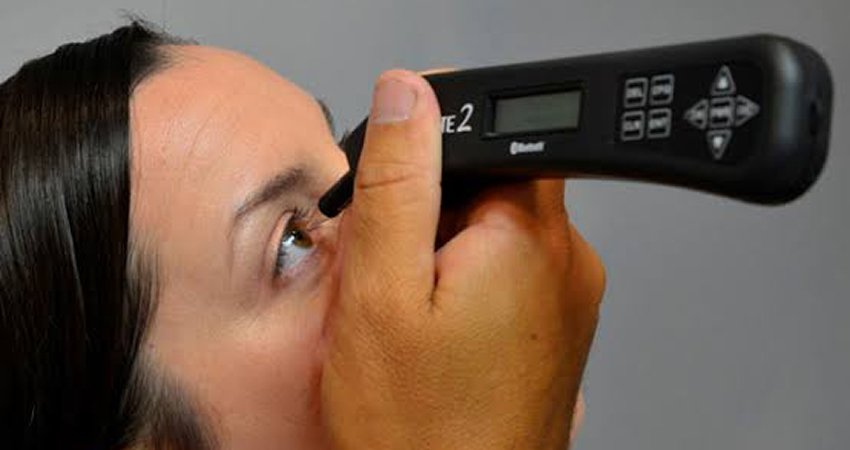
Pachymetry is a rapid, completely non-invasive examination. Following a single drop of topical anesthetic, an ultrasonic micro-probe or non-contact optical pachymeter takes multiple instantaneous cross-sectional readings across the central optical zone of your cornea.
The software calculates your mean central thickness within milliseconds. Dr. Amola Gandhi utilizes this data to apply clinical correction algorithms, deriving your true adjusted intraocular pressure and assessing your independent risk factor for glaucoma progression according to the landmark Ocular Hypertension Treatment Study (OHTS).
The Ocular Hypertension Treatment Study demonstrated that patients with thin central corneas have a 3-fold higher risk of developing glaucoma compared to those with thick corneas, even at similar measured pressures.
By assessing your corneal biomechanics, Dr. Gandhi accurately stratifies your risk level and avoids unnecessary lifelong medications for patients with naturally thick, healthy corneas.
Why measuring corneal thickness is critical in glaucoma care:
In most adults without corneal disease or prior refractive surgery, corneal thickness remains relatively stable throughout life, so pachymetry is typically performed once as a baseline and repeated only if clinical changes occur.
No. A thin cornea is an independent risk factor, not a disease by itself. It means you require closer surveillance because your measured pressure might read lower than it actually is.
Yes. You will simply remove your contact lenses prior to the quick examination, and can resume wearing them following the consultation.