Categories
North Gujarat's premier dedicated glaucoma super-specialty centre.

Surgical implantation of self-regulating Ahmed Glaucoma Valve drainage devices for refractory glaucoma.
When standard medical treatments, laser procedures, or previous trabeculectomies fail to achieve safe pressure levels—or in complex cases such as Neovascular Glaucoma, Uveitic Glaucoma, Trauma-induced Glaucoma, or Glaucoma following corneal transplantation—a Glaucoma Drainage Device (GDD) is the definitive surgical solution.
The Ahmed Glaucoma Valve (AGV) is the premier valve-regulated drainage implant in modern ophthalmology. At Atharva Glaucoma Centre, Dr. Amola Gandhi has extensive expertise in AGV micro-surgical implantation, restoring stable pressure control for patients with even the most complex, refractory glaucoma presentations.
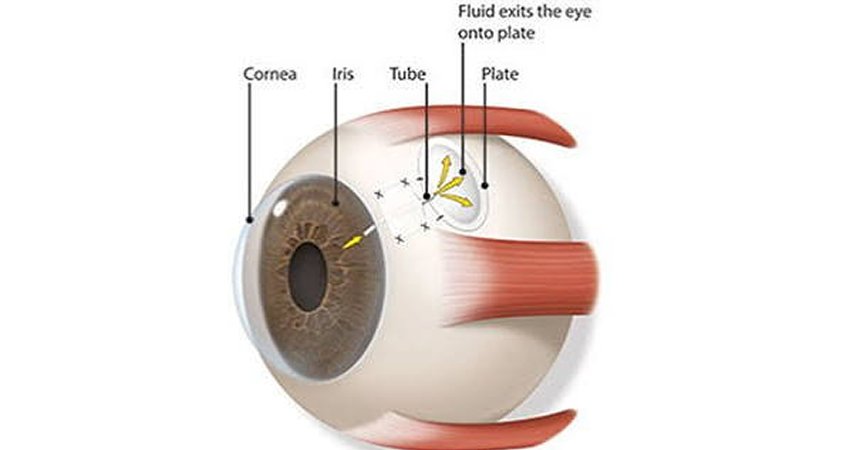
The Ahmed Valve consists of a flexible medical-grade silicone micro-tube connected to a patented, pressure-sensitive Venturi-flow valve mechanism housed inside a contoured polypropylene or silicone endplate reservoir. The valve remains closed when pressure is below 8 mmHg and opens smoothly as pressure rises above 10 to 12 mmHg, preventing dangerous post-operative hypotony.
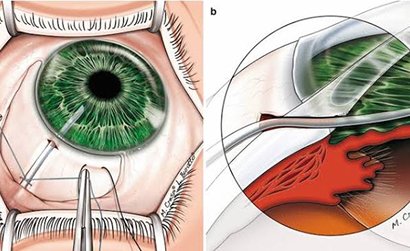
Under gentle anesthesia, the endplate is secured onto the sclera in the superotemporal quadrant, 8 to 10 mm behind the limbus. The micro-tube is inserted into the anterior chamber (or sulcus) through a tiny needle track and covered with a donor scleral patch or pericardial graft to prevent tube erosion, ensuring long-term biocompatibility.
Unlike non-valved tube implants (such as Baerveldt) which require temporary rip-cord ligatures, the Ahmed Valve's non-obstructive elastomeric membranes provide immediate, calibrated flow resistance.
This unique feature permits immediate IOP reduction on day one while offering reliable protection against flat anterior chambers and choroidal detachment.
Key clinical advantages for patients with refractory glaucoma:
No. The endplate is situated far back on the eyeball beneath the conjunctiva and covered by the upper eyelid. After the initial post-operative healing phase, you will not feel the valve.
Yes. The Ahmed Valve is constructed from medical-grade silicone and polypropylene plastics with zero metallic parts, making it 100% MRI-safe.
The Ahmed Valve is designed to be a permanent, lifelong implant that remains functional indefinitely to drain aqueous fluid.