Categories
North Gujarat's premier dedicated glaucoma super-specialty centre.

Specialized micro-surgical reconstruction for leaking, dysesthetic, over-filtering, or failed trabeculectomy blebs.
Following trabeculectomy, the subconjunctival filtration bleb is the delicate lifeline that allows aqueous fluid to exit the eye. Over months or years, a bleb may develop complications such as transconjunctival aqueous leaks, excessive thinning (avascular bleb), symptomatic overhang (bleb dysesthesia), persistent hypotony, or bleb-related ocular infection (blebitis).
A leaking or compromised bleb creates a direct doorway for bacteria into the eye, placing the patient at urgent risk of catastrophic endophthalmitis and permanent vision loss. Bleb Revision & Repair is a highly specialized micro-surgical subdiscipline designed to reconstruct the conjunctival barrier, seal leaks, and preserve delicate pressure balance.
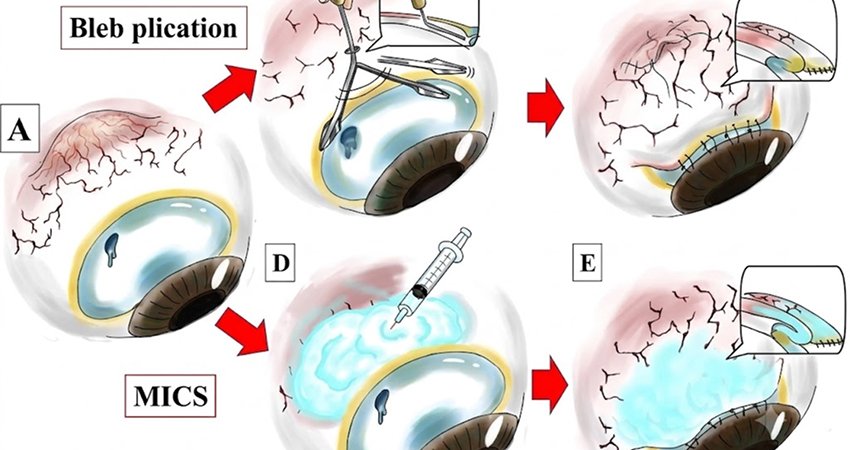
Depending on the specific bleb pathology, Dr. Amola Gandhi employs tailored micro-surgical strategies. For over-filtering blebs and hypotony, compressive transconjunctival sutures or scleral patch graft reinforcement can re-establish proper outflow resistance.
For chronic leaks or avascular cystic blebs, the friable tissue is meticulously excised and covered with a vascularized conjunctival advancement flap, rotational autograft, or amniotic membrane transplant (AMT). Fibrin tissue glue and fine 10-0 nylon sutures seal the micro-architecture, ensuring watertight integrity.
A positive Seidel test (fluorescein clearance demonstrating aqueous leakage) signals a medical priority. Prompt bleb revision halts bacterial infiltration and re-inflates the anterior chamber.
Dr. Gandhi combines micro-surgical reconstruction with targeted antibiotic coverage, salvaging surgical filtration while protecting your precious eye.
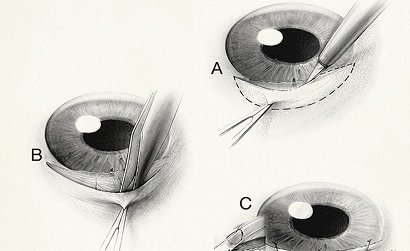
Key goals achieved through specialized bleb repair:
Warning signs include sudden foreign-body sensation, eye redness, blurred vision, excessive watery discharge, or noticeable softening of the eyeball. If you experience these symptoms, contact Atharva Glaucoma Centre immediately.
Yes. Bleb revision is performed comfortably under local peribulbar or topical anesthesia with monitored sedation as an outpatient daycare procedure.
Yes. By carefully tailoring the revision, Dr. Gandhi aims to seal the leak or adjust resistance while preserving adequate aqueous filtration to maintain target pressure.